British Shorthair Cat Guide: History, Care, and Characteristics
British Shorthair
Contents
- 1 British Shorthair
- 2 The History and Origin of the British Shorthair
- 3 Physical Characteristics
- 4 The Iconic Blue British Shorthair
- 5 Popular Color Varieties
- 6 Temperament and Personality
- 7 Health and Lifespan
- 8 Diet and Nutrition
- 9 Grooming and Coat Care
- 10 British Shorthair vs American Shorthair
- 11 Living with a British Shorthair
- 12 British Shorthair Kittens
- 13 Finding British Shorthair Breeders
- 14 The British Shorthair in Popular Culture
- 15 FAQ About British Shorthair Cats
- 16 Is British Shorthair Cats Good Choice For You?
- 17 Resources and Further Reading

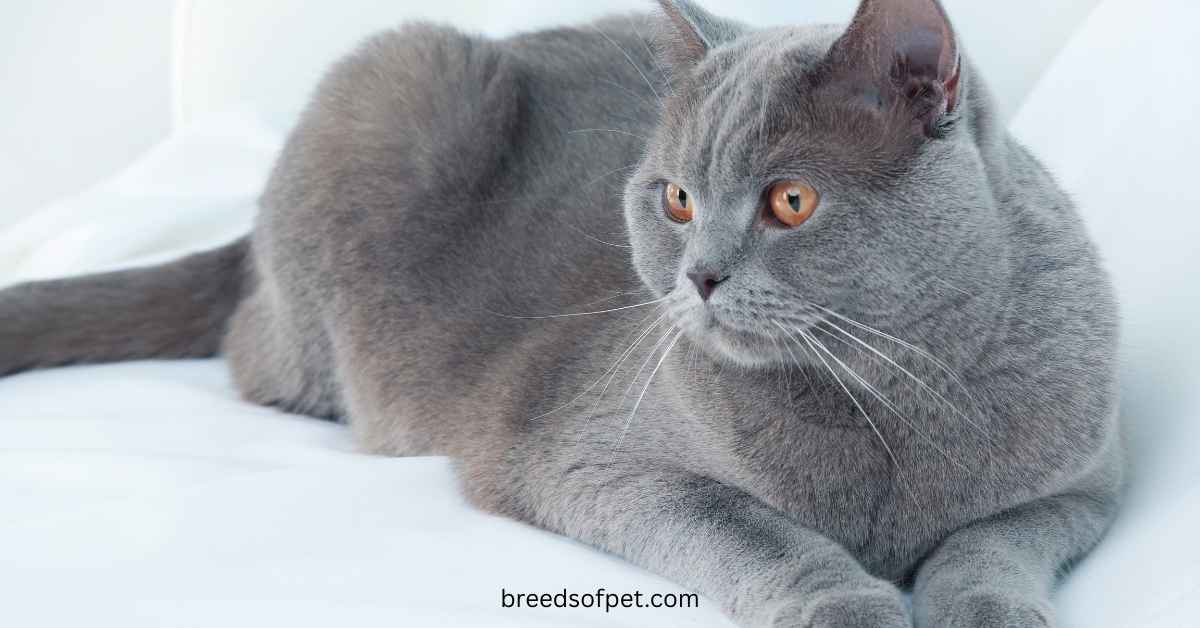
One of the most popular cat breeds in the world, the British Shorthair is distinguished by its unique round face, soft coat, and generally quiet disposition. For decades, British Shorthair cats—often known for their “teddy bear” look—have won many cat aficioners. One of the earliest known cat breeds, these strong, well-built felines descended from domestic cats of Roman Britain. Today’s British Shorthair is the culmination of generations of meticulous breeding that produces a strong, healthy friend with a very British appeal. From the traditional blue-gray to the stunning white British Shorthair, these cats provide an amazing mix of laid-back attitude and unique look that has guaranteed their ongoing appeal among cat aficioners all over.
The History and Origin of the British Shorthair
Ancient Roots in Britain

The British Shorthair began about two thousand years ago when the Romans brought Egyptian household cats into England. Mostly valued for their hunting ability, these cats maintained colonies free of mice free. Over millennia, these immigrant cats mated with native European wildcats to generate strong felines appropriate for Britain’s climate.
Beginning a purposeful breeding effort in the late 19th century, the British Shorthair as we know it today began to take shape. Often known as the “Father of Cat Fancy,” Harrison Weir was crucial in this development by showing these creatures at Crystal Palace in London’s first official cat show in 1871.
Near Extinction and Recovery
During World Wars I and II, the breed suffered a significant drop as breeding operations were mostly shelved in response to food shortages and other wartime restrictions. Often outcrossing Persian cats to replenish their numbers, committed breeders attempted to resurrect the British Shorthair after World War II. The larger face and heavier coat of the contemporary British Shorthair owe much to this Persian influence.
The breed had recovered greatly by the 1970s, and big cat societies all over acknowledged it. While extending the color range beyond the conventional blue, British Shorthair breeders today nevertheless preserve the unique qualities that make these cats so remarkable.
Physical Characteristics
Distinctive Body Structure
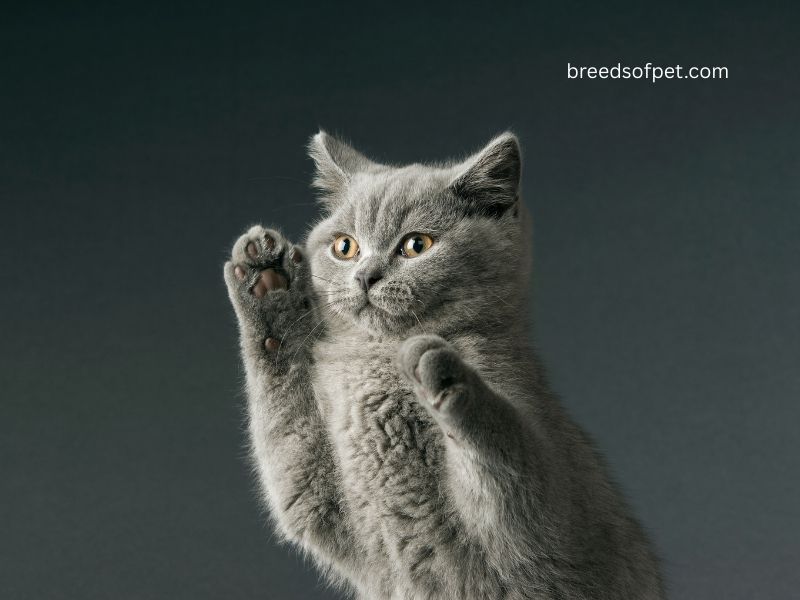
A medium-sized cat with a clearly strong, muscular frame, the British Shorthair is Men usually weigh between 9 and 17 pounds; women vary from 7 to 12 pounds. Their bodies are cobby—short and robust—with large chests, powerful legs, and rounded paws.
The British Shorthair cat’s round face—which is marked by large cheeks and a short, wide nose—is among its most charming traits. Their broad, wide-set eyes usually complement their coat color; copper or gold is most popular in blue variations; the white British Shorthair generally has startling blue or odd-colored eyes.
The Coat: Colors and Patterns
Although the traditional blue-gray, also known as “British Blue,” is perhaps the most identifiable variant, British Shorthairs now come in a startling range of colors and patterns:
| Color Varieties | Common Eye Colors | Notable Characteristics |
| Blue (Gray) | Gold/Copper | The classic gray British Shorthair with dense plush coat |
| Black | Gold/Copper | The black British Shorthair cat with sleek, non-reflective coat |
| White | Blue, Gold, or Odd-eyed | The white British Shorthair is often associated with blue eyes |
| Golden | Green or Gold | The British Shorthair golden has black tipping over rich apricot undercoat |
| Cinnamon | Amber/Gold | The cinnamon British Shorthair displays a warm brown coat with reddish tones |
| Orange/Red | Gold | The British Shorthair orange varies from deep red to lighter ginger shades |
| Cream | Gold | Pale version of the red variety |
| Chocolate | Gold | Rich, warm brown coat |
| Lilac | Gold | Pale, dusty gray with pinkish tone |
These colors can appear in solid patterns or with various markings including tabby, tortoiseshell, colorpoint, and bicolor patterns. The variety of coat colors has broadened the appeal of the breed, with options to suit every preference.
The Iconic Blue British Shorthair
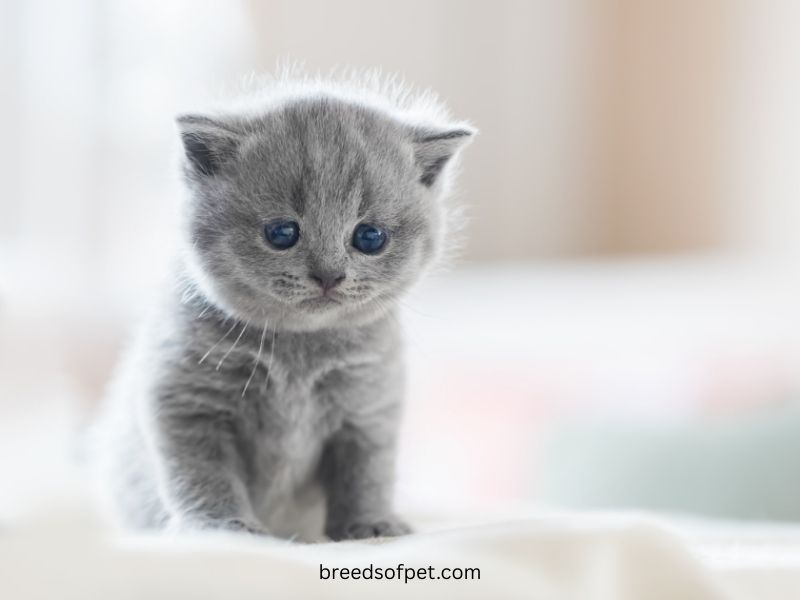
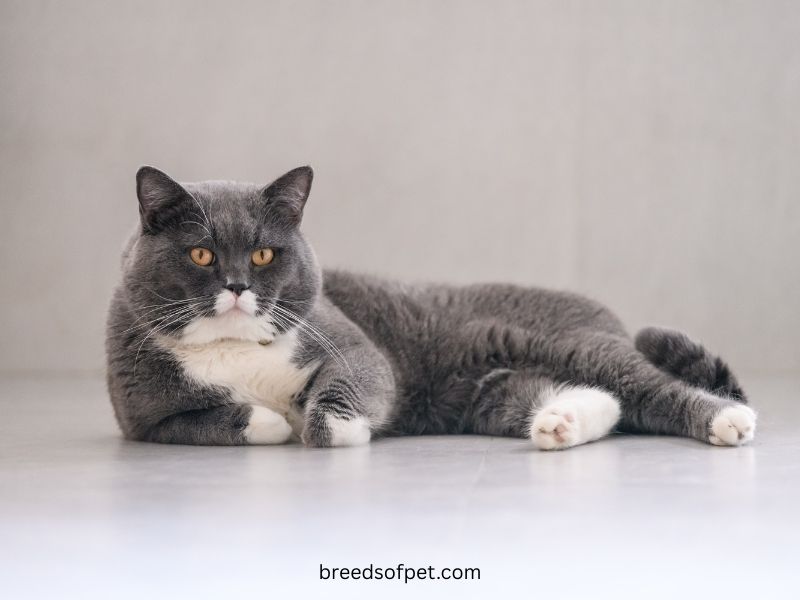
Among the most well-known and historically important color variations in the breed, the blue (gray) one merits particular attention. Most people’s iconic picture of the gray British Shorthair is one of a coat in rich blue-gray with copper or gold eyes.
This unique hue comes from a dilution gene that tones black fur blue-gray. When the cat is laying down, the soft, thick coat’s sharp texture contrasts with the body to give the impression of a bearskin rug.
Particularly well-known in the late 19th and early 20th centuries, the British Blue was dubbed “the blue blooded gentleman” for its aristocratic look and refined manner. Though there are now numerous color variants, the blue is the breed’s standard-bearer.
Popular Color Varieties
The White British Shorthair
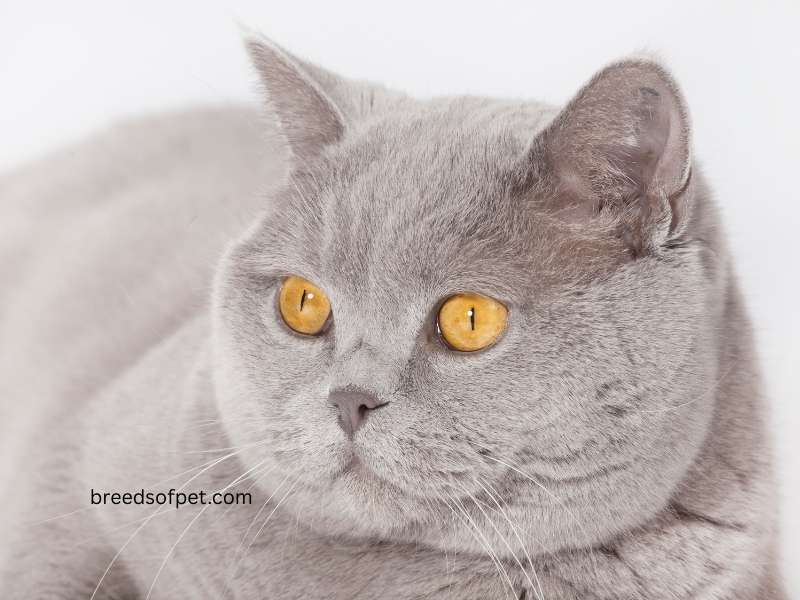
The white British Shorthair offers a stunning blank canvas that highlights the breed’s distinctive features. These cats can have different eye colors depending on genetics:
- Blue eyes (often associated with the white masking gene)
- Gold/copper eyes (most common)
- Odd eyes (one blue, one gold or green – heterochromia)
White British Shorthairs require some special care considerations, as white cats with blue eyes have a higher chance of congenital deafness. Responsible British Shorthair breeders test their white kittens for hearing issues before placing them in homes.
The Black British Shorthair Cat
With its thick velvet-like non-reflective coat, the black British Shorthair cat presents a stunning aspect. Complementing their midnight hair, these cats should show pure black from roots to tips with no rusty tint using brilliant gold or copper eyes that provide a dramatic contrast.
Because of their elegant look and the many legends and folklore around them, black cats frequently appeal especially to people. In the British Shorthair, this hue accentuates the unique soft coat texture very nicely.
The British Shorthair Golden

One of the most unique and sought-after color variations are the British Shorthair golden. As the cat walks, these cats provide an amazing shimmering appearance with their warm, rich undercoat of apricot or golden cream with black tips on the hairs.
Usually having green or gold eyes, goldens exude luxury. Selected mating with Persians containing the golden gene produced this color variation, which is still somewhat unusual when compared to more frequent hues like blue and black.
The Cinnamon British Shorthair
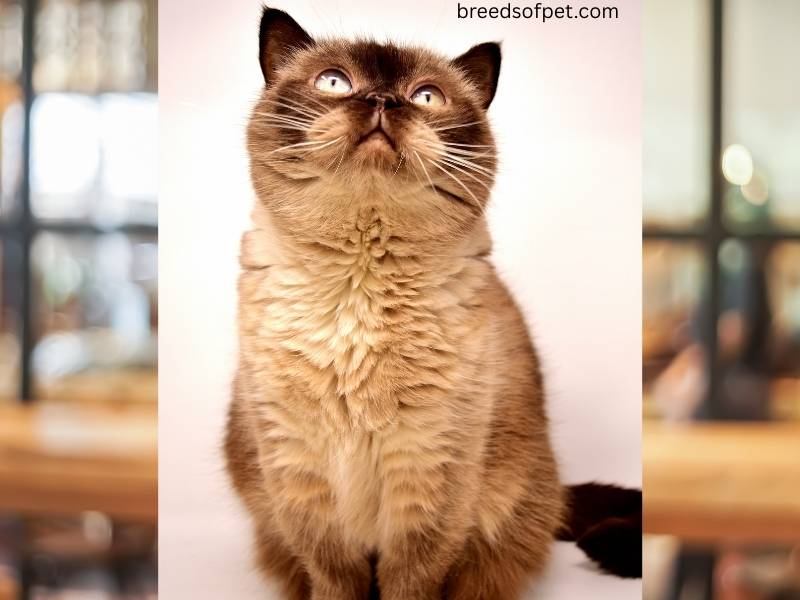
The cinnamon British Shorthair has a warm, medium brown coat with very clear reddish undertones. This much more recent color variant comes from a particular genetic mutation in the black gene that produces a lighter, warmer brown than the chocolate hue.
Usually with amber or gold eyes, cinnamon British Shorthairs fit their warm-toned clothing. For those seeking something unique, this hue is still somewhat unusual and a great discovery.
The British Shorthair Orange
Officially referred to as “red” in cat fancy language, the British Shorthair orange runs in deep, rich red to lighter ginger tones. Though females may also be orange or red, these cats inherit the “red gene,” sex-linked and more often seen in men.
Usually with copper or gold eyes, Red British Shorthairs may show the traditional single color or many tabby patterns. Their warm tone offers a lovely contrast to the breed’s colder-toned blues and lilacs.
Temperament and Personality
The British Character
The even-tempered, calm attitude of British Shorthairs is well-known. These cats are exactly the classic British reserve—dignified, understated, yet fiercely devoted. They usually consist of:
- Independent without being aloof
- Affectionate without being clingy
- Playful but not hyperactive
- Adaptable and easygoing
British Shorthairs are quite quiet, unlike more talkative breeds; they use mild chirps and gentle purrs instead of noisy meowing. They are therefore great neighbors and apartment pets.
Interaction with Family Members

Strong ties to their family bind British Shorthairs, yet they show love in subdued ways. Though not usually lap cats, they prefer being close to their people; they frequently accompany them from room to room or from seat to seat instead of on them.
When properly introduced, these cats are renowned for getting along with dogs, other cats, and youngsters as well as other animals. Though they usually like gentle handling rather than rough play, their calm and tolerant demeanor makes them great family pets.
Although a British Shorthair kitten will normally be more active and lively than an adult cat, even young British Shorthairs sometimes show the breed’s natural calmness.
Health and Lifespan
General Health Profile
Usually strong and healthy, British Shorthairs have quite few breed-specific medical problems. Their general soundness results from their natural growth free of severe traits that could create health issues in certain pedigree breeds.
Usually with good care, British Shorthairs have a 14–20 year lifetime. Like other pedigree cats, they may, however, be prone to certain hereditary disorders:
- Hypertrophic cardiomyopathy (a form of heart disease)
- Hemophilia B (a blood clotting disorder more common in males)
- Polycystic kidney disease (though less common than in related breeds like Persians)
Responsible British Shorthair breeders screen their breeding stock for these conditions, reducing the risk in kittens. Regular veterinary check-ups are essential for early detection of any health issues.
Weight Management
British Shorthairs have a predisposition for obesity, particularly after neutering, because of their naturally stocky shape and somewhat sedentary temperament. Since extra weight may aggravate joint problems and raise the risk of diabetes and other health conditions, weight control is very vital.
Owners should keep a close eye on their cat’s weight, provide suitable portion management, make sure they get regular exercise from play sessions, and choose quality food meant for the particular requirements of their breed—Royal Canin British Shorthair formulations created with body type in mind.
Diet and Nutrition
Nutritional Needs
British Shorthairs require a balanced diet rich in high-quality protein to maintain their muscular build. Their nutritional needs change throughout their lives:
- Kittens: Require food high in protein, calories, and certain nutrients to support rapid growth and development
- Adults: Need maintenance formula with controlled calories to prevent weight gain
- Seniors: Benefit from senior-specific formulas with joint support and moderate protein levels
Specialized Foods for British Shorthairs
Several pet food manufacturers produce breed-specific formulas designed for British Shorthairs. Royal Canin British Shorthair is one of the most well-known, featuring:
- Kibble shaped specifically for their broad muzzles and slower eating style
- Nutrient profiles that support skin and coat health
- Controlled calorie content to help prevent obesity
- Joint support ingredients for their solid frames
While breed-specific foods like Royal Canin British Shorthair can be beneficial, any high-quality cat food appropriate for the cat’s life stage can meet their nutritional needs when fed in appropriate portions.
Grooming and Coat Care
Coat Maintenance
One of the most common questions potential owners ask is, “Do British Shorthair cats shed?” The answer is yes—despite their short coat, British Shorthairs are moderate to heavy shedders due to their dense, plush double coat.
Their grooming needs include:
- Weekly brushing with a steel comb during normal periods
- Daily brushing during seasonal shedding periods (typically spring and fall)
- Occasional bathing, though this is rarely necessary
The good news is that their coat doesn’t tend to mat or tangle, making maintenance relatively straightforward compared to longhaired breeds.
Allergies and Hypoallergenic Potential
Another frequent question is, “Are British Shorthair cats hypoallergenic?” Unfortunately, British Shorthairs are not considered hypoallergenic. They produce the Fel d 1 protein in their saliva and sebaceous glands, which is the primary allergen that affects humans.
Their dense coat can trap dander, and their moderate to heavy shedding means they may not be suitable for allergy sufferers. People with mild allergies might manage with regular grooming and cleaning routines, but those with severe cat allergies should consider truly hypoallergenic breeds.
British Shorthair vs American Shorthair
Understanding the differences between these two popular breeds can help potential owners make an informed choice. While they share some similarities, British Shorthair vs American Shorthair cats have distinct characteristics:
| Characteristic | British Shorthair | American Shorthair |
| Origin | United Kingdom | United States |
| Body Type | Cobby, stocky, round | Athletic, muscular, less round |
| Face Shape | Round with full cheeks | Less round, more moderate |
| Coat Texture | Dense, plush, crisp | Medium-dense, hard |
| Temperament | Reserved, calm, dignified | Playful, more active |
| Size | Medium to large | Medium |
| Lifespan | 14-20 years | 15-20 years |
| Traditional Colors | Blue (gray) | Silver tabby |
Although both make great companion cats, the American Shorthair frequently shows greater agility and hunting instincts while the British Shorthair is often more subdued and laid back. The American has a more modest, working-cat physique; the British has a clearly spherical look.
Living with a British Shorthair
Environmental Needs
British Shorthairs are adaptable cats that can thrive in various living situations. Their moderate activity level and generally quiet nature make them suitable for apartment living. They appreciate:
- Cat trees or perches for observing their domain
- Cozy hiding spots for privacy
- Scratching posts to maintain their claws
- Interactive toys for mental stimulation
Although not very active, British Shorthairs gain from set play periods to avoid fat and boredom. Puzzle toys and training sessions appeal to them naturally because of their intellect.
Social Needs
Despite their independent nature, British Shorthairs do enjoy companionship. They typically do well with:
- Working owners, as they’re content to entertain themselves during the day
- Multi-pet households, usually getting along with other animals
- Families with children, though they prefer gentle interaction
They may not seek constant attention, but British Shorthairs do form strong bonds with their families and enjoy participating in household activities in their own dignified way.
British Shorthair Kittens
Development and Growth
The British Shorthair kitten undergoes significant changes as it matures:
- Birth weight: Approximately 90-110 grams
- Growth rate: Steady but not as rapid as some breeds
- Maturity: Slow developers, reaching full size at 3-5 years
- Color development: Some colors may change or develop with age
British Shorthair kittens display the breed’s characteristic round face from an early age, though the full cheeks that give adults their distinctive appearance develop gradually over time.
Selecting a British Shorthair Kitten
When looking for a British Shorthair kitten, potential owners should:
- Research reputable British Shorthair breeders with positive reviews and ethical practices
- Visit the cattery if possible to observe living conditions
- Meet the kitten’s parents to gauge temperament and appearance
- Verify health testing for genetic conditions
- Ensure kittens are well-socialized and raised in a home environment
- Confirm appropriate vaccinations and veterinary care
Reputable breeders typically place kittens in new homes between 12-16 weeks of age, after they’ve received initial vaccinations and been properly socialized.
Finding British Shorthair Breeders
Choosing a Reputable Breeder
Finding the right breeder is crucial for ensuring you get a healthy, well-socialized kitten. Responsible British Shorthair breeders typically:
- Register their cats with recognized cat associations
- Perform health testing for genetic conditions
- Raise kittens in a clean, enriching environment
- Provide appropriate veterinary care, including vaccinations
- Offer support and guidance to new owners
- Provide contracts and health guarantees
Red flags to watch for include breeders who:
- Offer kittens younger than 12 weeks
- Don’t allow visits to their cattery
- Have multiple litters or breeds available constantly
- Can’t provide health testing documentation
- Seem more focused on profit than welfare
Questions to Ask Breeders
When contacting British Shorthair breeders, consider asking:
- How long have they been breeding British Shorthairs?
- What health testing do they perform on their breeding cats?
- How do they socialize their kittens?
- What guarantees do they provide?
- What support do they offer after adoption?
- Can they provide references from previous kitten buyers?
Cost Considerations
British Shorthairs are a premium breed, and quality kittens from reputable breeders typically range from $1,500 to $3,000 or more, depending on:
- Pedigree and lineage
- Color and pattern (rare colors like cinnamon British Shorthair often command higher prices)
- Show quality vs. pet quality
- Geographical location
While this investment may seem substantial, it typically includes initial vaccinations, microchipping, and health guarantees. The higher price from reputable breeders reflects the costs of proper health testing, quality nutrition, and appropriate veterinary care.
The British Shorthair in Popular Culture
The British Shorthair has made numerous appearances in popular culture, most famously as the inspiration for the Cheshire Cat in Lewis Carroll’s “Alice’s Adventures in Wonderland.” The classic British Blue is thought to have influenced the character’s depiction, particularly in early illustrations.
Other notable British Shorthair appearances include:
- The “British Blue” cats in Whiskas cat food advertisements
- Puss in “Puss in Boots” from the Shrek franchise was partially modeled on British Shorthair features
- Church, the family cat in Pet Sematary (both book and film adaptations)
- Various internet-famous cats of the breed
Their distinctive appearance makes them popular choices for advertising, film, and television when a quintessentially “cat-like” cat is needed.
FAQ About British Shorthair Cats
Do British Shorthair cats shed a lot?
Yes, do British Shorthair cats shed more than you might expect from a shorthaired breed. Due to their dense double coat, they shed moderately year-round with heavier shedding during seasonal changes in spring and fall. Regular brushing (1-2 times weekly, increasing during shedding seasons) helps manage loose fur and reduces hairballs.
Are British Shorthair cats hypoallergenic?
No, are British Shorthair cats hypoallergenic is a common question, but they are not considered hypoallergenic. They produce the Fel d 1 protein that causes allergic reactions in sensitive individuals, and their dense coat traps dander. People with severe cat allergies should consider breeds specifically bred to produce fewer allergens.
How do British Shorthairs compare to American Shorthairs?
When comparing British Shorthair vs American Shorthair cats, the main differences lie in body type, temperament, and historical development. British Shorthairs are rounder, more cobby, and typically more reserved, while American Shorthairs are more athletic, slightly more active, and were developed as working cats. Both make excellent companions, but they have distinct physical and personality characteristics.
What is the lifespan of a British Shorthair cat?
British Shorthairs typically live between 14-20 years, making them one of the longer-lived cat breeds. Proper nutrition, regular veterinary care, maintaining appropriate weight, and keeping them as indoor cats can help them reach the upper end of this range.
Are British Shorthair cats good with children and other pets?
Generally yes, British Shorthairs are patient and tolerant, making them suitable for families with children who understand how to interact respectfully with cats. They typically coexist peacefully with other cats and cat-friendly dogs, though individual personalities vary. Their calm, easygoing nature makes them adaptable to various household compositions.
How much exercise do British Shorthairs need?
While not highly active, British Shorthairs benefit from daily play sessions to maintain physical and mental health. Interactive toys, climbing opportunities, and puzzle feeders can provide stimulation. Adult British Shorthairs are typically less playful than kittens but still enjoy short, engaging play sessions.
What health issues are common in British Shorthairs?
British Shorthairs are generally healthy, but they can be prone to hypertrophic cardiomyopathy (heart disease), hemophilia B (more common in males), polycystic kidney disease, and obesity. Regular veterinary check-ups and purchasing from breeders who perform health testing can help minimize these risks.
Is Royal Canin British Shorthair food necessary for this breed?
While Royal Canin British Shorthair food is specifically formulated for the breed’s needs, it isn’t strictly necessary. Any high-quality, age-appropriate cat food can meet their nutritional requirements when fed in appropriate portions. The breed-specific formula offers certain advantages but is one of many suitable options.
How often should I groom my British Shorthair?
Brushing once or twice weekly is typically sufficient during normal periods, increasing to daily during seasonal shedding. Their short coat rarely mats but benefits from regular grooming to remove loose fur and distribute skin oils. Bathing is rarely necessary unless the cat gets into something dirty.
When do British Shorthair kittens reach full size?
British Shorthairs are slow to mature, typically reaching their full size between 3-5 years of age. This is considerably longer than many other cat breeds. A British Shorthair kitten will continue to fill out and develop their characteristic chunky build well into adulthood.
Is British Shorthair Cats Good Choice For You?
The British Shorthair is evidence of years of meticulous breeding producing a unique cat with an obvious look and winning attitude. From the dramatic black British Shorthair cat to the warm cinnamon British Shorthair, from the traditional gray British Shorthair to the strikingly white British Shorthair, these cats provide an amazing mix of beauty and temperament.
While their quite simple care needs appeal to both new and seasoned cat owners, their laid-back demeanor makes them perfect friends for many diverse homes. Though typical concerns for prospective owners are inquiries like “do British Shorthair cats shed?” and “are British Shorthair cats hypoallergenic?” their undemanding, flexible nature balances their modest grooming requirements.
The clear variations in the British Shorthair vs American Shorthair comparison draw attention to the specific characteristics of British Shorthairs. Understanding the demands of the breed—from specialist nutrition like Royal Canin British Shorthair to appropriate socializing—ensures a harmonic bond whether your search is for a beautiful British Shorthair kitten or a dignified adult.
For those enthralled with the teddy bear appeal of these amazing cats, initial contact with reliable British Shorthair breeders can help you to welcome one of these unique animals into your house. Your British Shorthair friend will provide years of calm companionship, subdued tenderness, and the unique presence that has made this breed cherished worldwide with correct care.
Resources and Further Reading
- The Cat Fanciers’ Association – British Shorthair Breed Profile
- International Cat Association – British Shorthair Breed Standard
- British Shorthair Cat Club
- Royal Canin British Shorthair Nutrition Information
- Cornell University College of Veterinary Medicine – Feline Health Center
Read More https://breedsofpet.com/